
(This post is part of my 2024 reads! I’m aiming to read 10 books this year, outside of academic coursework.)
It’s election season here in the United States! I spent the last few weeks of my summer break going down a bit of a Kamala Harris rabbit hole. Frankly, she never stood out to me as vice president, but all of a sudden she was all over my news feed. I was (am) curious: Who is Kamala Harris, and what does she stand for?
The Truths We Hold is a memoir that tracks her life, from…
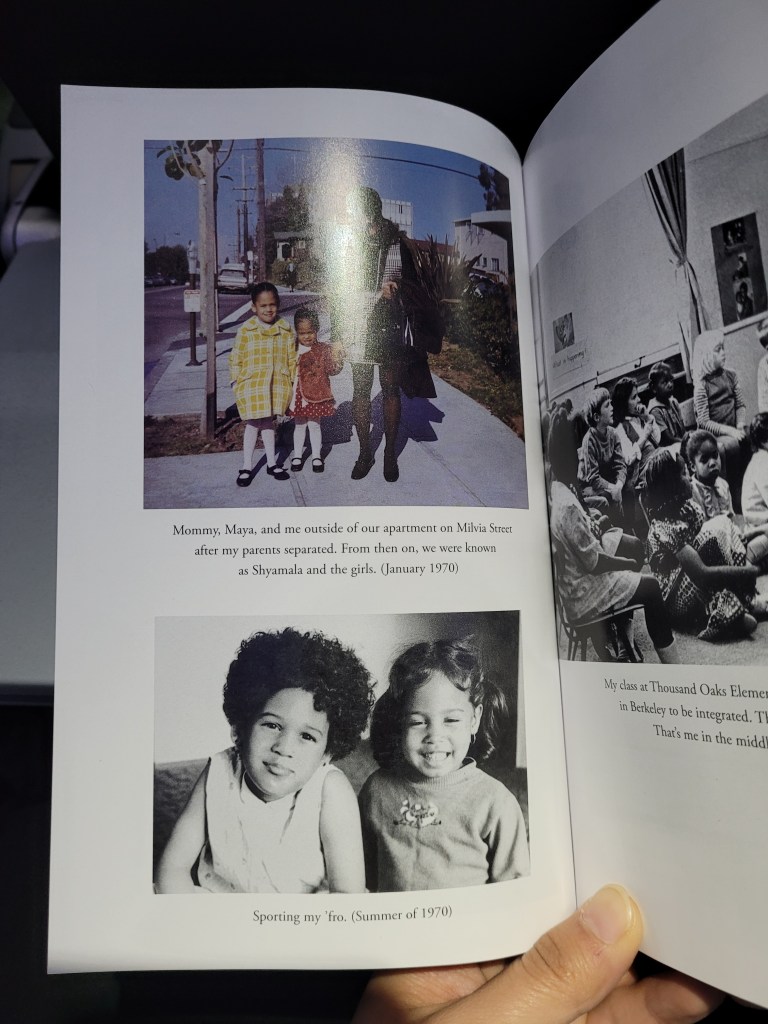
- growing up in California, raised primarily by a single mother, and
- attending the historically black Howard University, to…
- working her way up the law hierarchy as a public prosecutor to become San Francisco’s first female District Attorney, then California’s Attorney General in 2010, and
- becoming a Senator in 2016, then Vice-President in 2020.
My initial reaction after reading this book: newfound respect for Kamala. She came across as a leader who is incredibly clear-sighted and unafraid to challenge much bigger, more established parties. Her mother’s experience as an immigrant, as well as as an activist in the civil rights movement, clearly played a huge role in shaping Kamala’s worldview, particularly in terms of ensuring broad-based access to education and fighting for women’s rights. (I’m starting to see how healthy parenting is so integral to building convictions—the Obamas being another example.)
If there’s one thing my summer in Washington D.C. has taught me, however, it’s—sadly—not to take things at face value. Digging a little deeper, I realised that just weeks after Kamala released The Truths We Hold in January 2019, she launched her first presidential campaign. I wasn’t aware of this timeline when I first picked up the book. Putting on a more cynical lens though, it becomes clear that the book proudly touts all her achievements while glossing over any mistakes or contradictions in her career. A quick example: Kamala’s punitive approach to tackling truancy, which held parents legally liable for their children’s absence in school, drew criticism for disproportionately impacting families of colour. A 2019 article in The Huffpost showed how Cheree Peoples, whose daughter Shayla frequently missed school because of a serious genetic illness, was handcuffed and placed under arrest under the new law. These experiences suggest a vastly different picture than the rosy one Kamala paints in the book. The book also contains a bunch of policy speak that reads like a campaign manifesto, from healthcare to criminal justice reform.
Still, these criticisms shouldn’t necessarily detract from Kamala’s rich experience in public service. Some things that stood out to me:
- Her willingness to hold two truths at the same time, and refusal to believe in false choices. “You can want the police to stop crime in your neighbourhood and also want them to stop using excessive force.” (26).
- Her experience negotiating with banks in the aftermath of the 2008 financial crisis. Kamala refused to accept the initial (paltry) settlement and launched an investigation into the numbers. Eventually, the banks gave in, bringing the initial $2-4 billion deal up to $18 billion, to help Californians reduce the amount they owed on their mortgages. In the book, she describes the intense pressure from everyone else trying to pull her back into the talks, and how she continued to hold fast to her convictions that Californian homeowners deserved better.
“I’d pray that I was choosing the right path, and for the courage to stay the course.” (99)
- She takes Sunday night dinners with her family very seriously (!!)
- Her decision to drive change from within, rather than outside and against, the system: “I knew part of making change was what I’d seen all my life, surrounded by adults shouting and marching and demanding justice from the outside. But I also knew there was an important role on the inside, sitting at the table where the decisions were being made. When activists came marching and banging on the doors, I wanted to be on the other side to let them in.” (25)
- I wonder if she still believes, just as strongly, in the value of driving change from the inside. It’s no secret that Kamala’s views have moderated significantly over the years in order to secure a larger voter base, including no longer supporting a ban on fracking or decriminalising border crossings.
- And finally, the line that has stuck with me most: that political capital doesn’t gain interest unless you spend it. In the context of the book, Kamala meant that those in positions of power must leverage their privilege to take risks and pursue bold actions. (I’m not entirely sure her track record as a politician reflects this, to be honest.) But I think this line is so relevant in a world where people are prone to accumulating political capital for the sake of status, wealth, or even bragging rights. A friend recently reminded me that proximity to power and powerful people does not equal power. And, even when you have reached the highest rungs of the political ladder, what good is power itself if you are not using it to drive positive change for others?
All in all, I’d say The Truths We Hold is a very effective campaign book. If I hadn’t made the connection to Kamala’s presidential campaign launch in 2019, I would have had left with an almost entirely positive view of her. I still think the book offers important insight into who Kamala Harris is as a person, and the politics behind the book itself shouldn’t necessarily take away from any positive change she has made. But read this book with your eyes wide open.
 Kate Yeo
Leave a comment